Title: “Hands-on Training in Mushroom Cultivation: A Sustainable Biotechnological Approach”
Date: 17th–19th September 2025
Venue: M. G. Science Institute, Ahmedabad, Gujarat
Organized by: Department of Microbiology & Biotechnology
Number of Participants: 76 Students
Experts: Mr. Hitesh Chauhan and Mr. Parth Desai
A three-day Mushroom Cultivation Workshop was successfully conducted from 17th to 19th
September 2025 at M. G. Science Institute, jointly organized by the Department of
Microbiology and the Department of Biotechnology. A total of 76 students enthusiastically
participated in the program. (26 from PG sem III Microbiology, 51 from UG sem III
Biotechnology)
The workshop aimed to provide hands-on training and theoretical knowledge on various
aspects of mushroom cultivation, including types of edible mushrooms, spawn preparation,
substrate selection, sterilization techniques, and post-harvest management. The practical training
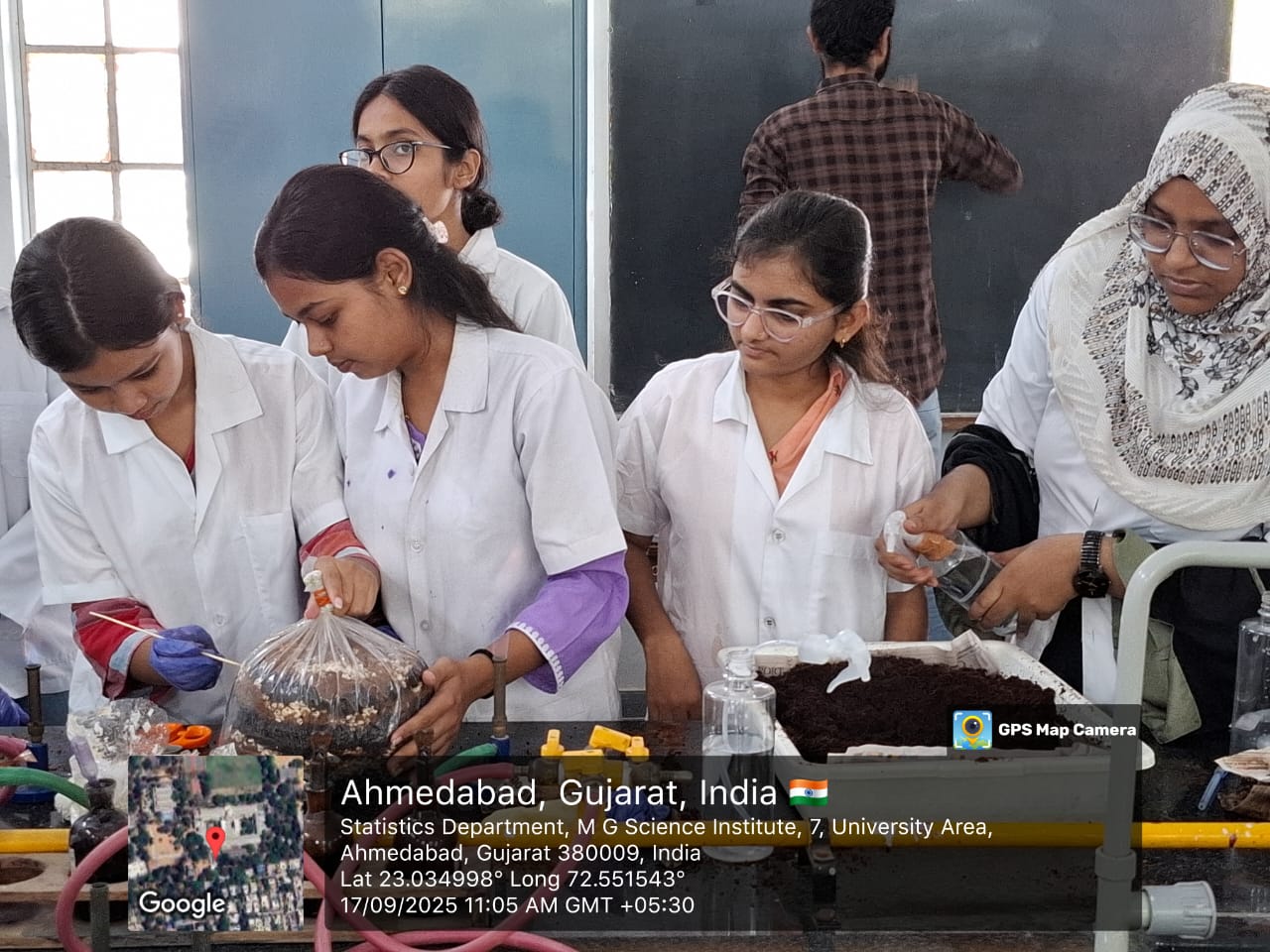
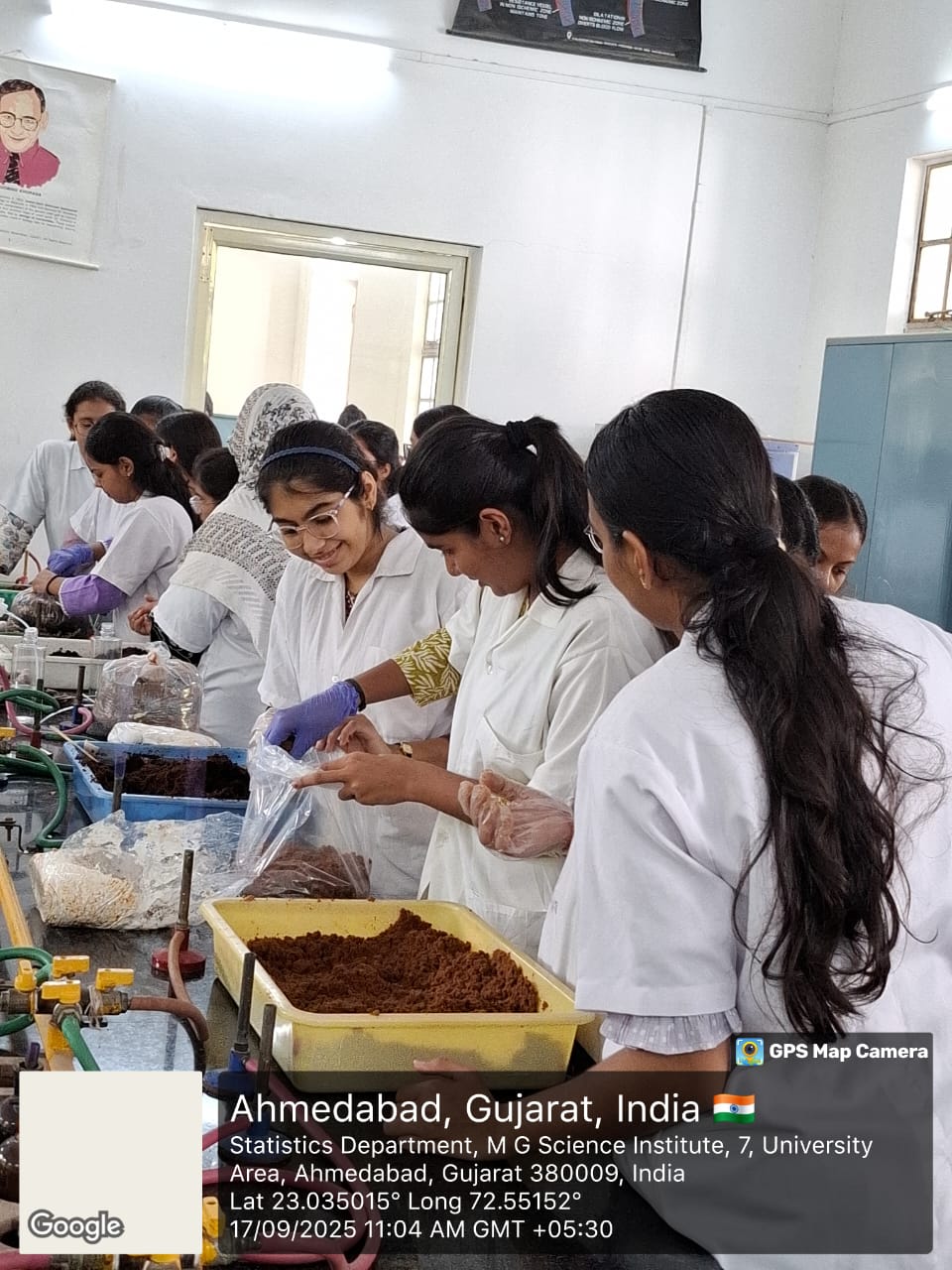
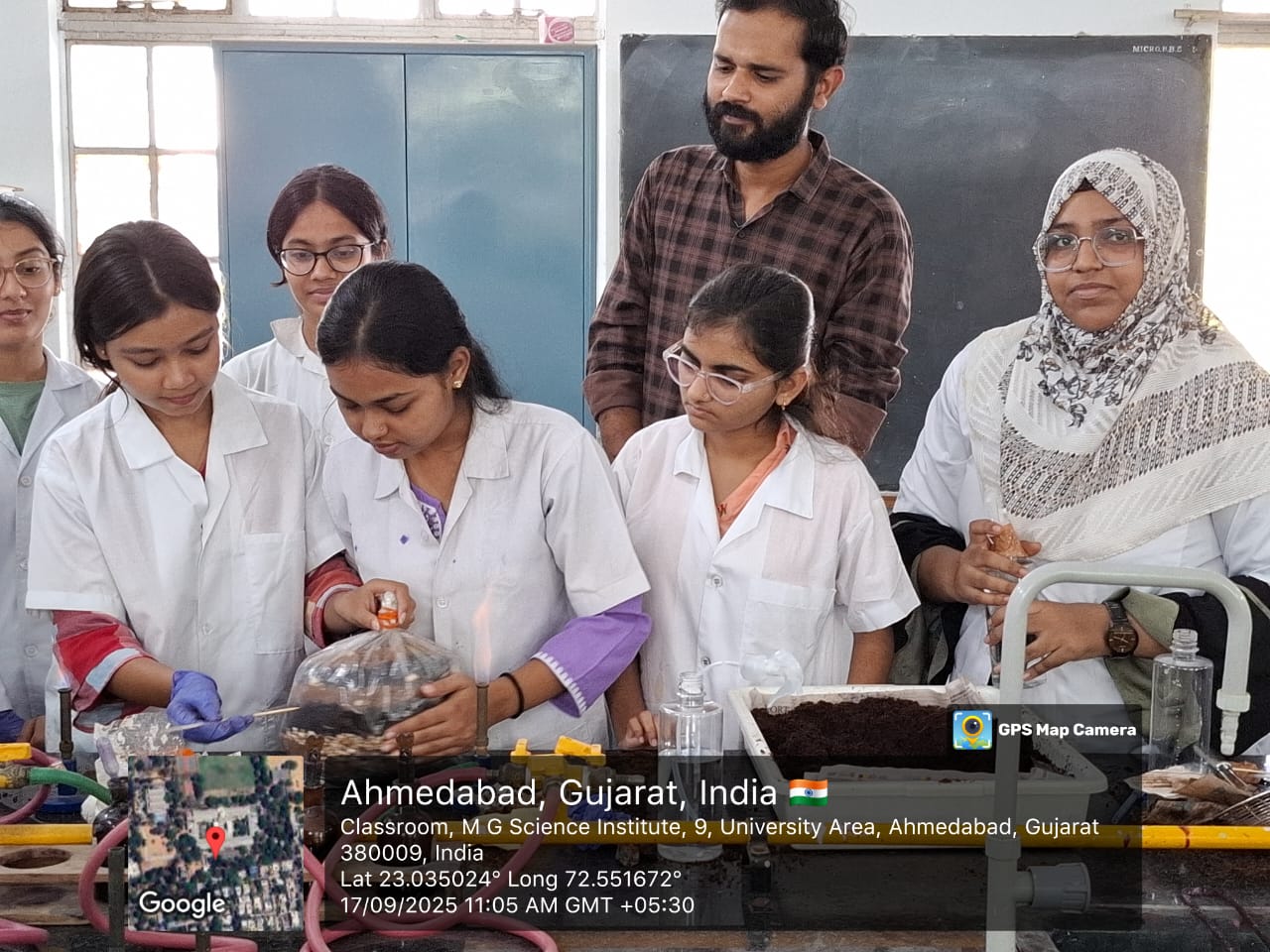
session of workshop with set of 25 students each day was conducted by the expert. This
included, raw material handling, sterilization, packing and inoculation of spawns. Sessions were
held introducing participants to the significance of mushroom cultivation, its economic potential,
and the basic biology of fungi. Expert also discussed the different varieties of edible and
medicinal mushrooms. Students were given hands-on experience in substrate preparation,
sterilization, inoculation techniques, and spawn management. The session emphasized hygiene,
contamination control, and environmental conditions necessary for optimal growth.
The session for harvesting techniques and post-harvest processing methods including guidance
on marketing strategies, entrepreneurship opportunities, and value-added products was
conducted. The workshop concluded with a valedictory function, during which certificates of
participation were distributed.
Mushroom cultivation is an emerging field in applied microbiology and biotechnology that
integrates sustainable agriculture, environmental conservation, and entrepreneurship. As fungi
play a pivotal role in biodegradation, nutrient cycling, and food production, equipping students
with practical knowledge in mushroom cultivation is both scientifically and economically
relevant
The Departments of Microbiology and Biotechnology extend heartfelt thanks to all resource
persons, faculty, and participants for making the event a grand success.